I’m Silently Judging Your Welds
Let’s be honest—I opened the zip folder for I’m Silently Judging Your Welds expecting a smirk, not a stitch test. But as an embroidery designer who’s stitched everything from nursery quilts to boutique aprons, I don’t just laugh at clever slogans—I ask: *Will this hold up under needle and thread?* So I pulled it into my embroidery software, loaded it onto scrap cotton twill, and ran it on a mid-weight sweatshirt blank destined for a local welding shop’s holiday gift run. Here’s what happened—and what you need to know before using I’m Silently Judging Your Welds in your next real project.
A Design That Speaks Before It Stitches
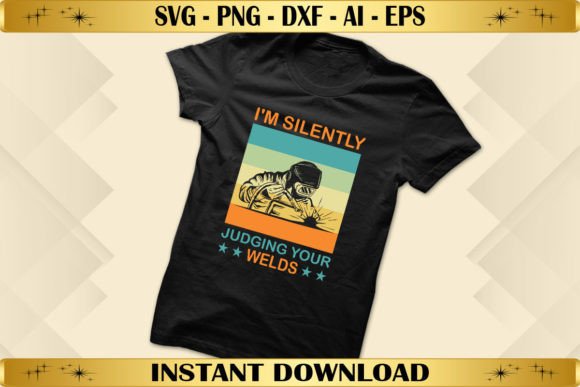
First impression? Sharp, dry, and instantly recognizable. The typography leans into bold, slightly uneven sans-serif lettering—no frills, no curves pretending to be friendly. It’s got that workshop-wisdom vibe: equal parts insider joke and quiet authority. Visually, it reads cleanly at 3–4 inches wide, with generous letter spacing and strong negative space between words. That breathing room isn’t just aesthetic—it’s functional. In embroidery, tight kerning collapses. This design avoids that trap entirely. It feels like a T-Shirt Designs graphic born to cross over into stitchable territory—not as an afterthought, but as a natural extension.
Where It Shines (and Where It Needs Guardrails)
I’m Silently Judging Your Welds works best when treated like a confident statement piece—not a subtle accent. I tested it on a heavyweight canvas tote bag (for welders’ wives who appreciate irony), a unisex crewneck sweatshirt, and a cotton tea towel. On all three, it held clarity without excessive density. No satin-stitch outlines or dense fill areas that could pucker thin fabrics. No tiny serifs or decorative flourishes to vanish in thread. Just clean, legible letterforms built for readability at arm’s length.
That said—don’t force it where it doesn’t belong. Avoid I’m Silently Judging Your Welds on baby onesies or stretchy performance tees unless you’re willing to digitize a simplified version yourself. The original file set includes SVG, PNG, DXF, AI, and EPS—great for screen printing or vinyl cutting—but remember: those are *print-ready*, not *embroidery-optimized*. You’ll need to digitize it properly for machine embroidery design use. If you’re new to digitizing, start with a 3.5-inch width and keep stitch density moderate—especially in the lowercase “i” dot and the apostrophe. Those small details love to blur on textured fabrics or dark backgrounds.
Real-World Fit: From Workshop Walls to Etsy Listings
This isn’t just a gag graphic. It’s niche-targeted storytelling. I’ve seen welders wear shirts like this to trade shows—and watch colleagues point, grin, and snap photos. That kind of organic engagement is gold for Etsy sellers and craft fair vendors. As a Graphics asset, I’m Silently Judging Your Welds pairs perfectly with complementary designs: a minimalist arc welder icon, a “Ground Clamp Approved” badge, or even a soft-toned “Welding Mom” variant for family-focused shops.
For commercial embroidery, it scales well on left-chest placements (ideal for workwear) and center-back positions on jackets or aprons. On curved surfaces like caps? Proceed carefully—flatten the text layout first or reduce width by 15% to avoid distortion. And always use cutaway stabilizer on knits or lightweight cottons. I learned that the hard way when the “W” on my test sweatshirt shifted slightly on the final pass—fixable, but avoidable with proper hooping and stabilization.
What It Does for Your Handmade Product—and Your Customer
There’s something quietly powerful about giving a customer a piece that makes them feel *seen*. Not cutesy. Not generic. I’m Silently Judging Your Welds delivers that specificity. When stitched cleanly, it signals craftsmanship—not just humor. Buyers notice the even tension, the crisp edges, the absence of thread nests. That builds trust. It tells them: *This wasn’t slapped on. It was chosen, tested, and stitched with care.*
That perception lifts perceived value—especially for personalized gifts or boutique merchandise. A coffee shop gifting embroidered aprons to their barista team? This design adds personality without sacrificing professionalism. A small shop selling handmade kitchen towels? It turns utility into conversation-starting charm. Even in holiday embroidery contexts—think “ugly sweater” swaps or DIY ornament kits—it lands with wit and warmth.
Practical Designer Notes Before You Stitch
- Test first. Run I’m Silently Judging Your Welds on fabric scraps matching your final product—same weight, same weave, same dye lot if possible.
- Check contrast. Try black thread on light fabric and white or gray thread on dark. Avoid neon or metallics unless you’ve confirmed they won’t shred on dense lettering.
- Review stitch density. Overly dense fills increase stitch count and risk puckering—especially on woven cotton or linen blends.
- Confirm hoop size. At full scale (4 inches), it fits comfortably in a 5x7 hoop. For smaller placements, resize proportionally—never stretch.
- Inspect corners and terminals. Look for sharp angles or narrow joins where thread may skip or bunch. Adjust pull compensation if needed.
- Mock it up digitally. Drop the PNG into a printable mockup on both light and dark apparel. Does it pop? Does the message read instantly?
- Stabilize intentionally. Tear-away works for stable wovens; cutaway is safer for knits or textured fabrics like terry cloth.
- Verify licensing. These files are print-ready graphics—not pre-digitized embroidery files. Confirm whether commercial use is permitted before selling finished products or digital embroidery files derived from them.
In short: I’m Silently Judging Your Welds isn’t just clever—it’s *usable*. It bridges the gap between graphic design and tactile craft without demanding compromise. Whether you’re stitching for a client, stocking your Etsy shop, or building a line of workshop-themed handmade products, it earns its place—not because it’s trendy, but because it’s thoughtfully built for real fabric, real machines, and real people who appreciate both skill and sarcasm.