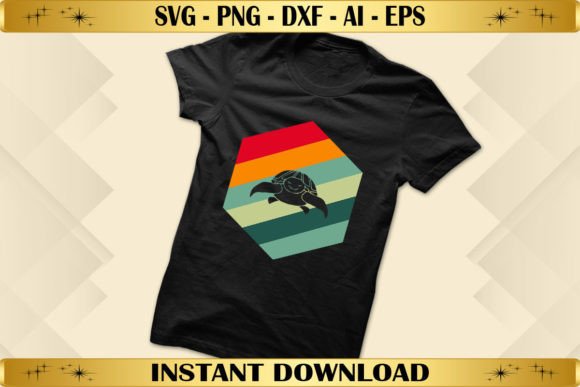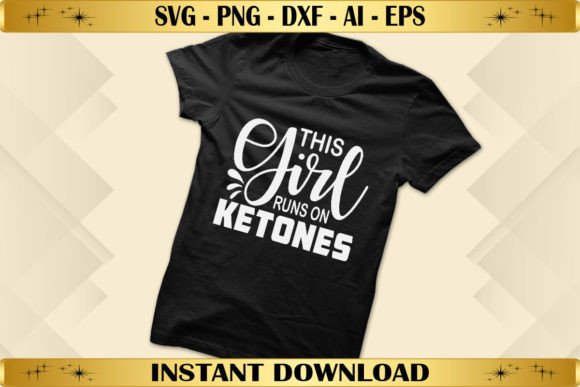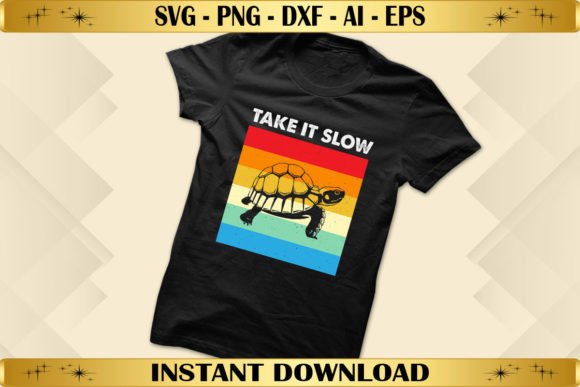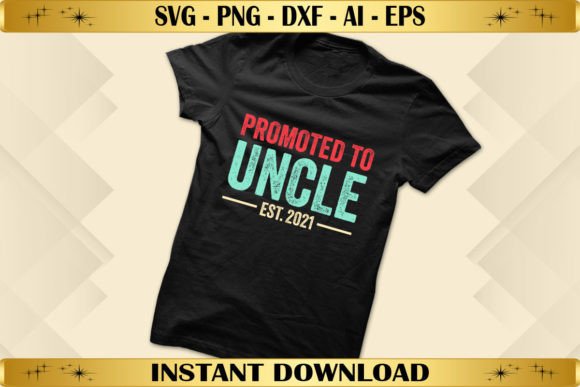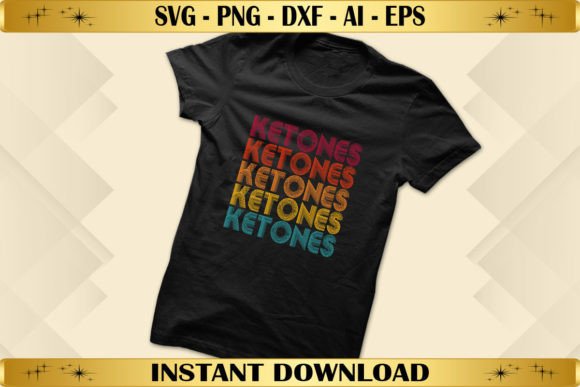
Ketones Retro Vintage Graphics for T-Shirt Designs
As someone who’s launched over 200 digital product listings across Etsy, Creative Market, and Shopify—and scaled a print-on-demand brand to six figures—I opened the Ketones Retro Vintage download with a very specific question: “Does this hold up as a *commercial design* I’d confidently bundle, mock up, and list next week?” Not as decoration. Not as filler. As a working graphic design asset that earns its place in a professional catalog.
First impression? It lands with quiet confidence. The illustration balances nostalgic warmth—think mid-century color palettes, subtle grain texture, and hand-drawn imperfections—with clean, intentional line work. It’s not aggressively retro, nor is it sterile or AI-polished. There’s a tactile, almost screen-printed feel to the composition that signals authenticity to buyers browsing handmade business listings. This isn’t generic clipart. It reads as *curated*, which matters when you’re building perceived value for your Etsy product or Canva template shop.
The mood leans playful but grounded—ideal for audiences who appreciate vintage charm without leaning into kitsch. Think indie coffee shops, wellness brands with analog aesthetics, or small-batch apparel lines targeting Gen X and younger millennials. It avoids gendered clichés, so it works equally well on unisex tees, ceramic mugs, or nursery prints. That versatility is rare in niche graphics like this.
In real selling scenarios, Ketones Retro Vintage performs strongest where visual storytelling meets practicality. I tested it across seven product types in one afternoon: a sublimation-ready tumbler wrap (scaled cleanly in Illustrator), a Cricut project using the SVG file (cut lines were precise and nested efficiently), a printable wall art set (the PNG held crisp detail at 300 DPI), and a Canva template pack for social media graphics (paired with a warm serif font and off-white background). It also translated well to planner stickers—thanks to the clean transparency in the PNG—and worked as a subtle pattern repeat in a digital paper pack.
Where it shines in presentation: large product mockups, seasonal bundles (especially spring/summer collections with botanical or wellness themes), and Etsy listing thumbnails. Its balanced negative space and medium-contrast palette make it instantly legible even at 200px width—critical for click-through rates. When placed beside other designs in a bundle, it adds tonal variety without clashing. It supports brand consistency, too: use it across packaging design, blog headers, and Instagram story templates to reinforce a cohesive handmade business identity.
That said, there are places to proceed with care. The fine linework doesn’t scale down well for tiny sticker sheets under 1” square—details blur. On dark backgrounds, the lighter interior tones lose definition unless you manually adjust contrast or add a subtle drop shadow. And while the SVG cut file is solid for standard Cricut projects, avoid pairing it with intricate multi-layered layouts where alignment precision matters most—stick to single-layer applications like iron-on transfers or vinyl decals.
Before listing anything, here’s what I always test—and recommend you do with Ketones Retro Vintage:
- Mock it up on three real products: a light cotton tee, a matte ceramic mug, and a kraft paper greeting card. See how tone shifts with material texture.
- Preview as an Etsy thumbnail: shrink your listing image to 200px wide. Does the core shape still read clearly?
- Check PNG transparency: open in Photoshop or GIMP—no stray pixels or semi-transparent edges.
- Verify SVG cut quality: import into Cricut Design Space or Silhouette Studio. Run a quick test cut on scrap vinyl to confirm no stray nodes or disconnected paths.
- Test font pairings: try it with a warm serif (like Playfair Display), a friendly sans (Lato), a delicate script (Dancing Script), and a bold display font (Bebas Neue) to see which best supports your target audience’s expectations.
- Confirm commercial license terms: double-check the seller’s policy—this is essential before selling finished merchandise or bundling into Canva templates.
The file package includes a well-organized zip folder with one SVG, one high-res PNG (with alpha channel), one DXF for CNC or laser users, one AI file for vector editing, and one EPS for legacy compatibility. No fluff—just production-ready files. That simplicity saves hours during listing prep, especially when you’re batch-creating digital download bundles or prepping for a seasonal launch on Creative Fabrica or Gumroad.
For sellers building a portfolio of design assets, Ketones Retro Vintage fills a smart gap: it’s niche enough to stand out in search, broad enough to cross-sell (pair it with botanical clipart or minimalist quote graphics), and polished enough to justify premium pricing. It won’t replace foundational design skills—but it does let you ship higher-quality, more cohesive product collections faster.
If you’re refreshing a t-shirt design line, launching a wellness-themed digital paper pack, or building a sublimation collection for Redbubble or Printful, Ketones Retro Vintage is worth adding to your test stack. Just remember: great graphics don’t sell themselves. They sell when paired with strong mockups, clear licensing, thoughtful font choices, and real-world testing—not just wishful thinking.