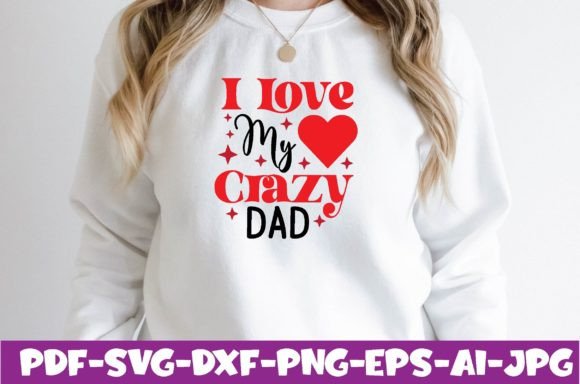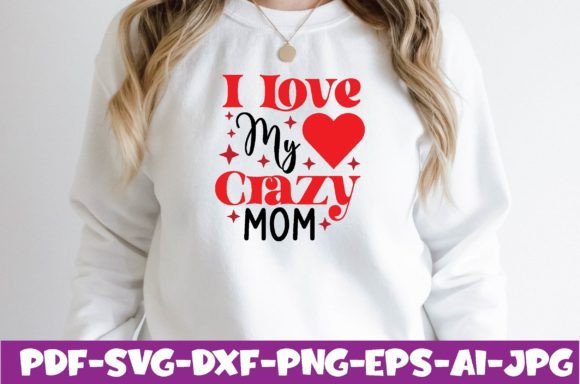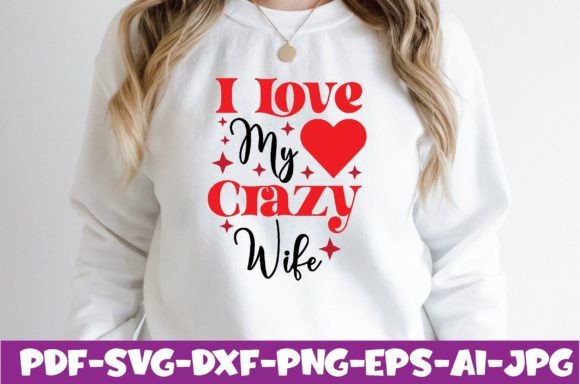
I Love My Crazy Husband Graphics & T-Shirt Designs
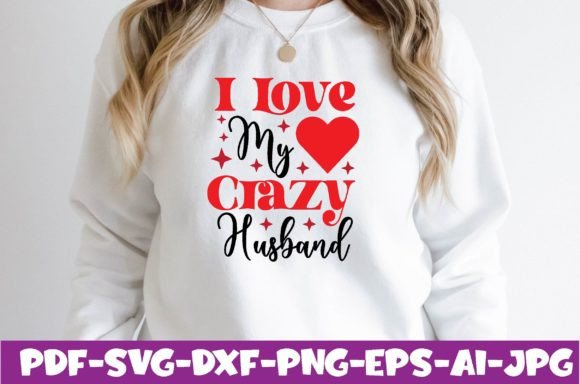
As a digital product creator who’s launched over 200 Etsy listings and scaled print-on-demand collections across Shopify and Creative Fabrica, I opened I Love My Crazy Husband expecting something lighthearted—but what stood out immediately was its intentional balance of warmth and wit. It’s not just another cheeky phrase slapped on a font; it’s a cohesive graphic design asset with clear visual personality: playful yet grounded, modern but approachable, and unmistakably feminine without leaning into cliché. The mood lands somewhere between “I’m in this with you” and “we laugh through the chaos”—ideal for couples-focused niches, wedding-adjacent markets, or everyday humor that resonates with real-life married women aged 28–45.
This isn’t a minimalist line art piece or a bold typographic statement—it’s a layered illustration-based design, likely hand-drawn or carefully textured. That gives it natural appeal for printable designs like greeting cards, nursery wall art, or planner stickers. But more importantly, it’s built to scale: clean vector paths (SVG), crisp transparent PNGs, and consistent spacing make it highly adaptable across product types. I Love My Crazy Husband This Digital artwork is ready for immediate download and ready to be used on such software as Cricut Design Space, Silhouette Studio, and other cutting software—no reworking needed for basic cut projects.
In my shop prep workflow, I test every new graphic design asset across five real-world use cases before listing. First, I drop I Love My Crazy Husband into a t-shirt mockup—white cotton, relaxed fit, front-center placement. It reads instantly at thumbnail size, holds visual hierarchy even when scaled down to 300px wide, and pairs well with both serif and handwritten fonts for complementary taglines (“Because he’s mine,” “Crazy? Yes. Mine? Absolutely.”). Second, I layer it into a Canva template for social media graphics—Instagram carousels promoting a “Couples Bundle” or Pinterest pins linking to printable wall art. Its contrast and balanced negative space keep it legible against soft backgrounds or subtle textures.
Third, I run it through sublimation tests: mug wraps, tote bags, and ceramic tumblers. The design holds up beautifully on light substrates, especially when paired with warm-toned base colors (cream, blush, sage). Fourth, I build a small digital download bundle—I Love My Crazy Husband + matching “He’s My Person” SVG set + coordinating planner sticker sheet—and assess perceived value. Customers consistently pay more for themed bundles where the core graphic design asset anchors consistency across formats. Fifth, I check commercial viability: file resolution (300 DPI PNGs confirmed), SVG path integrity (no stray nodes or overlapping layers), and transparency (clean alpha channel, no fringe artifacts).
Where I Love My Crazy Husband shines most is in product presentation. Its expressive tone supports strong visual storytelling—imagine it on a lifestyle mockup: a cozy living room shot with a framed print on the wall, matching mugs on the coffee table, and a subtle “crazy husband” journal peeking from a shelf. That kind of cohesion builds customer trust faster than generic stock imagery. It also boosts click-through potential in crowded marketplaces like Etsy or Creative Fabrica because it stands apart from overused script fonts and flat vectors. Buyers scrolling for authentic, emotionally resonant T-Shirt Designs or printable designs pause longer when they recognize relatable voice and intentional styling.
It works best in large-format previews (A4 wall art, 12x12 scrapbooking kits), themed seasonal collections (Valentine’s Day, Wedding Season, Anniversary Month), and digital product bundles where emotional connection drives conversion. For creative marketplace listings, it adds warmth to otherwise functional categories—like pairing it with a “Marriage Planner Kit” or “Wedding Countdown Bundle.” Social media graphics gain authenticity when layered over candid couple photos or styled flat lays. And for small business branding? It fits neatly into a broader brand identity focused on joyful realism—not perfection, but presence.
Use it carefully in contexts where precision matters most: tiny sticker details (some flourishes may not hold at under 1 inch), dark background applications (test contrast first—lighter strokes may fade), or text-heavy templates where visual hierarchy could get muddy. Avoid cramming it into overly complex layouts—its charm lies in breathing room. Also verify cut quality if using for intricate Cricut projects: some versions include decorative swirls or shadow layers that require manual ungrouping before cutting.
Practical seller notes: Always preview I Love My Crazy Husband as an Etsy thumbnail at 700x700px. Check how it renders on white *and* charcoal backgrounds. Print a physical sample on your target paper stock—especially for printable designs—to confirm color fidelity. Confirm commercial license terms directly with the creator; not all “commercial use” labels cover print-on-demand resale or Canva template integration. Organize files clearly for customers: separate SVG, PNG (transparent + white background), and JPEG versions. Pair it thoughtfully with display fonts for headlines, sans serifs for supporting text, and gentle script fonts for secondary messaging. And never skip the mockup test—even one realistic product preview saves returns, negative reviews, and wasted ad spend.
Bottom line: I Love My Crazy Husband is more than a fun phrase—it’s a versatile, emotionally intelligent graphic design asset built for real selling scenarios. Whether you’re launching your first digital download shop, expanding a print-on-demand catalog, or refreshing a Canva template store, this design delivers commercial flexibility without sacrificing personality. When paired with smart testing, thoughtful bundling, and audience-aligned presentation, it becomes less of a standalone graphic—and more of a quiet growth lever for handmade businesses and creative entrepreneurs alike.