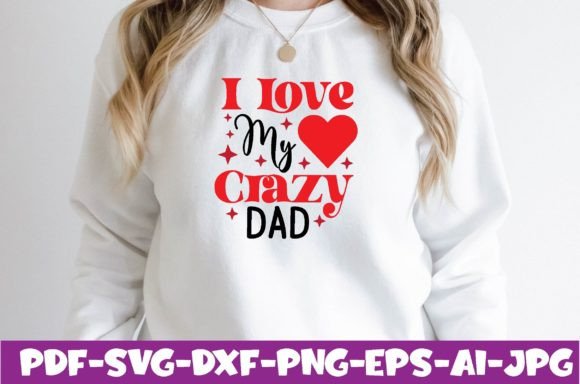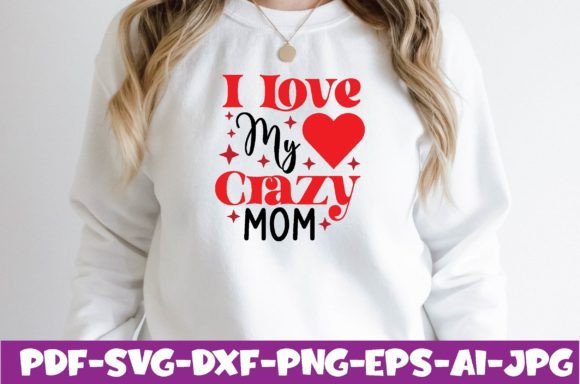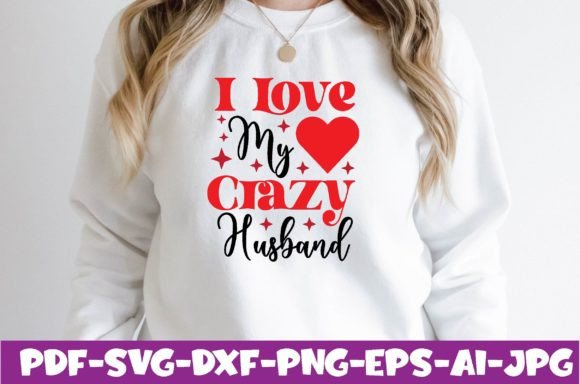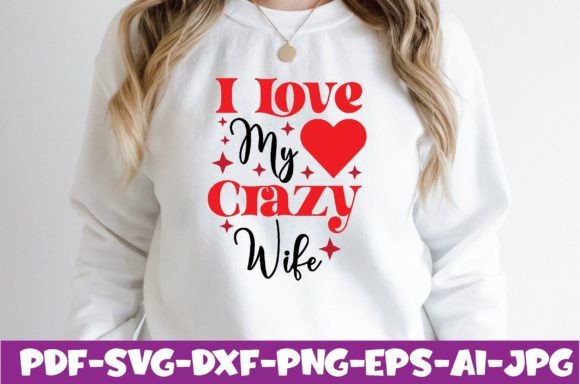
I Love My Crazy Wife Graphics & T-Shirt Designs
As a brand designer and content marketer who’s helped over 200 small businesses refine their visual storytelling, I opened I Love My Crazy Wife expecting a lighthearted, niche-ready graphic — and got exactly that. But what surprised me wasn’t just its charm; it was how flexibly this digital product slots into real-world campaigns without diluting brand integrity. Let’s break down how I Love My Crazy Wife functions not as a novelty clipart, but as a strategic graphic design asset for marketers building authentic, audience-aligned visuals.
A First Impression That Lands With Warmth — Not Whimsy
The moment you preview I Love My Crazy Wife, it reads as confident, affectionate, and intentionally unpolished — like a handwritten note tucked into a coffee cup. It leans into playful authenticity rather than irony or sarcasm, making it ideal for lifestyle brands, relationship coaches, wedding planners, or even pet-care entrepreneurs using “crazy” as shorthand for joyful chaos. It doesn’t scream “premium luxury,” but it *does* signal approachability, emotional honesty, and human-centered storytelling — all critical for building audience trust in crowded digital spaces.
Where This Graphic Design Asset Earns Its Keep
In my recent campaign for a boutique wedding-planning studio launching a “Real Couples, Real Moments” content kit, I Love My Crazy Wife became the anchor for three high-performing assets: a Pinterest pin promoting their free “Couples’ Conversation Starter” lead magnet, an Instagram Story sticker series highlighting client testimonials, and a printable “Date Night Kit” insert included with their digital product bundles. Why did it work? Because it reinforced tone *without* competing with messaging — the illustration carried warmth while the copy carried clarity.
- Social media graphics: Scales beautifully on Instagram carousels and Facebook ads when paired with clean sans serif fonts and ample negative space.
- Pinterest pins: Performs strongly with vertical cropping and bold text overlays — its expressive energy stops scrolls.
- Product labels & packaging accents: Works especially well on kraft paper tags, tote bags, or enamel pins where handmade charm matters more than corporate polish.
- Editorial design & blog graphics: Adds visual rhythm to long-form content about marriage, mental wellness, or modern relationships — never distracting, always reinforcing theme.
- Canva templates & digital product visuals: As an SVG design or high-res PNG design, it imports cleanly into Canva, Cricut Design Space, and Silhouette Studio — no pixelation, no layer collapse.
How It Strengthens Core Marketing Goals
I Love My Crazy Wife isn’t just decorative — it actively supports seven key marketing outcomes. It delivers a stronger first impression by establishing voice before a single word is read. It improves visual hierarchy when used as a focal point above body copy or alongside minimalist icons. It boosts consistent branding when applied across email banners, website headers, and printed merch — all sharing the same emotional signature. Most importantly, it builds emotional connection: audiences recognize themselves in the phrase, not just the art.
Best Fit: Hero Graphics, Campaign Headers & Branded Templates
This creative design shines brightest where personality leads. Use it as a hero graphic for a Valentine’s Day email sequence, a campaign header for a couples’ coaching launch, or a recurring decorative element inside branded Canva templates for social media managers. It also works exceptionally well as a packaging accent — think belly bands on journals, stickers on subscription boxes, or foil-stamped elements on greeting cards. For content creators bundling printable designs, it adds instant relatability to otherwise functional assets like habit trackers or gratitude journals.
Use With Intention — Not Assumption
That said, I Love My Crazy Wife should be used carefully in formal corporate branding, dense information layouts (like comparison charts or legal disclaimers), or low-contrast backgrounds where legibility suffers. Avoid pairing it with overly minimal brands that prioritize stark geometry — its expressive curves need breathing room. And never assume it works at tiny sizes: test readability at 48px and below, especially if repurposing for mobile app banners or notification graphics.
Pro Brand Designer Notes Before You Deploy
Before integrating I Love My Crazy Wife into your next campaign, run these checks: test it against your full brand color palette (not just primary — include neutrals and accent tones); verify black-and-white usage for print or embroidery; place it inside real mockups — not just thumbnails — to assess balance and scale; preview on actual mobile screens, not just browser simulators; compare it side-by-side with top competitor visuals to ensure distinction, not duplication; and confirm commercial license coverage — especially if using in paid ads, client deliverables, or resale products. Also, experiment with font pairings: it harmonizes best with friendly sans serifs (like Poppins or Nunito), gentle script fonts (for contrast), and clean display fonts — but can clash with aggressive serifs or ultra-thin typefaces.
Ultimately, I Love My Crazy Wife is more than a T-Shirt Designs staple — it’s a versatile, emotionally intelligent design asset built for creators who understand that modern design isn’t about perfection, but resonance. When aligned with purpose, audience, and platform, it transforms from clipart into a quiet brand amplifier — one that makes people smile, pause, and remember not just the message, but the feeling behind it.